secondhand
New Technologies in Archaeological Sciences new book
This title was generated by AI and may not be fully accurate.
This title was generated by AI and may not be fully accurate.
 New Technologies in Archaeological Sciences new book
New • Language: Greek
#archaeology • #academicbook • #science • #humanities • #newtechnologies
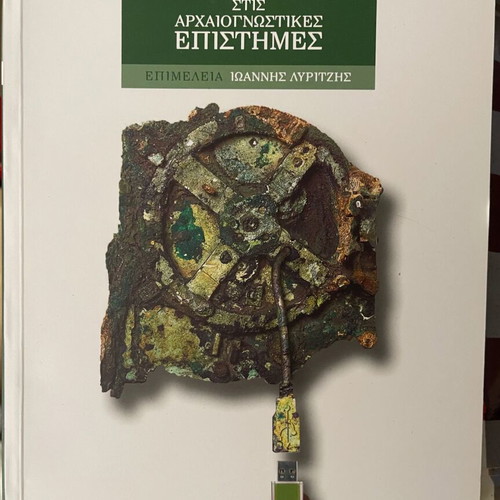
NEW TECHNOLOGIES IN ARCHAEOLOGICAL SCIENCES LYRIDZIS IOANNIS
The term New Technologies mainly refers to computer science with computers (PCs) as the main tool for processing and construction, as well as modern electronic scientific devices and physical methods that are activated by computer science and PCs. The Humanities Sciences here mainly refer to the humanities studies with a historical retrospective perspective and include history, archaeology, philology, linguistics, and art history.
Research in the Humanities studies, which include the Humanities Sciences, can fundamentally contribute to an analysis concerning the participation and understanding of the complex interrelation of the socio-economic challenges facing Europe. New Technologies with the Natural Sciences aimed at highlighting cultural heritage are a cornerstone in pre-education and awareness, achieving the promotion of educational research through information on the latest trends and techniques in the use of the natural sciences, and enhancing the synergy and complementarity of the duality of humanities with the natural sciences. The use of New Technologies in the study and research of the humanities sciences contributes in three ways: (a) to more accurate investigation and faster completion of research, (b) to the emergence of information derived from mechanistic introspection into the depths of the microcosm, and (c) to regional cultural economic development. Through deeper study of archaeological monuments and artifacts, and generally remnants of humanity from the past, the most comprehensive knowledge is revealed, which then becomes a product that creates multiplicative results, e.g., cultural tourism, reproduction of models, digital documentation of cultural goods, highlighting and unifying archaeological landscapes, cultural diplomacy. The cultural product that is analyzed in depth becomes attractive, impressive, and occupies a substantial position in sustainable economic regional development.
The contents of the Volume consist of 22 Chapters that specialize in various aspects of the humanities science, written by Greek and foreign experts with their collaborators in the respective field they cultivate. They are aimed at graduates and postgraduate students. The 22 Chapters are grouped into 6 Categories: (1) Museums, Museology, Preventive conservation of artworks, (2) Research for the promotion of outdoor archaeological sites and historical ensembles, (3) Conservation and reading of ancient texts, (4) Archaeology, Statistics, and Computer Science, (5) Digital databases and search engines in culture, (6) Multimedia technologies. (From the presentation on the back cover of the book)
€ 19,99
New • Language: Greek


FREE Buyer protection
We guarantee that you will receive the item or your money back. Learn more


Buy more, pay less 🛍️
Select more items from the same seller. Negotiate a better price, save on postage.