secondhand
Porcelain vase with ormolu decorative elements like new
This title was generated by AI and may not be fully accurate.
This title was generated by AI and may not be fully accurate.
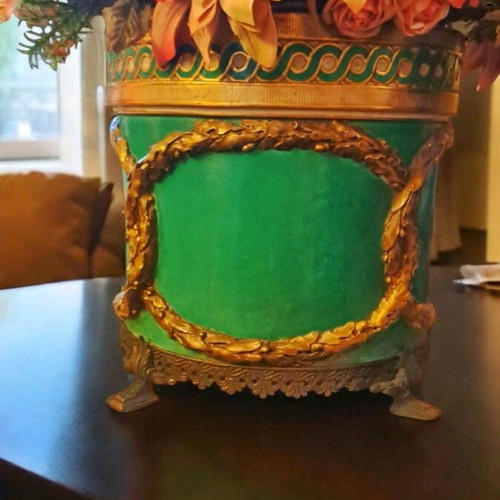 Porcelain vase with ormolu decorative elements like new
Like new
Fine porcelain vase with ormolu decorative elements
This vase is an excellent example of the combination of fine porcelain with ormolu decorative elements, which testify to the luxury and artistry of 18th-century European decorative art. The body, made of porcelain painted in a vibrant green color, is framed by bronze garlands and wreaths, gilded using the ormolu method. The bronze details exhibit exceptional detail and craftsmanship, highlighting the symmetrical patterns characteristic of the era. It rests on four carved feet, which add grace and balance to the whole. The object is not only a decorative element but also a testament to cultural history, representing the era when art and luxury were closely linked to social status and prestige.
The word ormolu comes from the French "or moulu" (ground gold) and refers to the method of gilding bronze with gold, using a mixture of gold and mercury. This process was extremely demanding and dangerous due to the toxicity of mercury, but it produced a brilliant, warm result that was very durable over time. Gilding was done by applying the mixture to the bronze and then heating it to evaporate the mercury, leaving a clean, impressive gold surface.
Ormolu was extensively used in France, mainly during the Louis XV (1715–1774) and Louis XVI (1774–1793) periods, when furniture and decorative objects adorned royal palaces and the homes of the aristocracy. Characteristic elements of this technique are the intricate designs, rococo patterns, garlands, motifs, meanders, laurel wreaths, lions, sphinxes, or portraits.
After the French Revolution, the technique continued to be used, but with less elaborate patterns, adapted to neoclassical trends.
€ 2.500,00
Like new
Pickup at Kifisia, Greece
FREE Buyer protection
We guarantee that you will receive the item or your money back. Learn more



Buy more, pay less 🛍️
Select more items from the same seller. Negotiate a better price, save on postage.